



Time to ‘fine-tune’ lime, amelioration activities
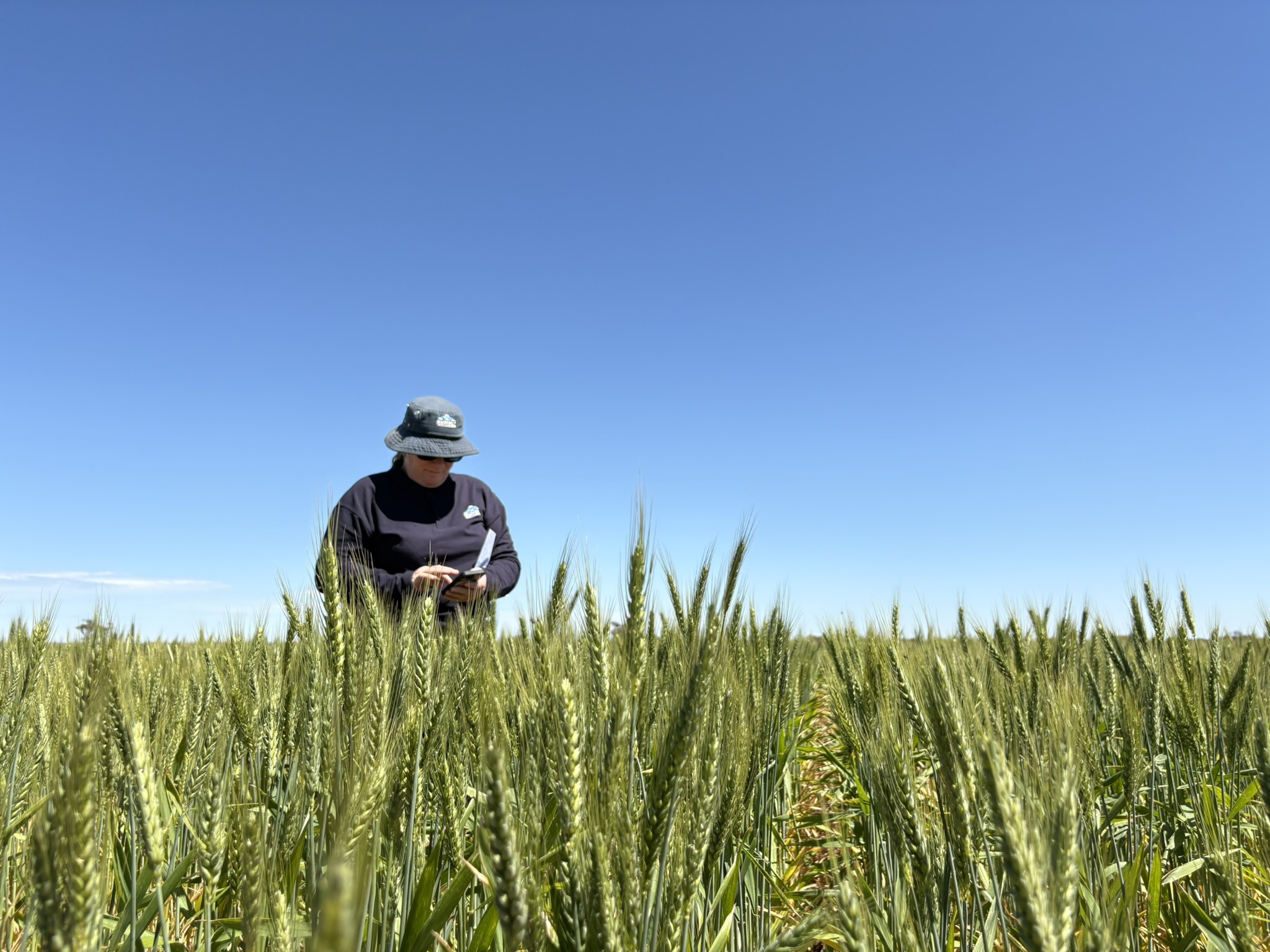
Coorow Area Manager Juliet McDonald says the key to liming programs now for many growers is identifying areas that still need amending and applying the right amount of lime – as well as ameliorating where possible – to ensure maximum returns.
WHILE there has been a strong trend in liming and amelioration progress in WA agriculture for improved crop production, there are still significant opportunities to fine-tune applications, target specific areas for remediation and apply crop nutrients more strategically.
Growers who have had a strong focus on liming are in a maintenance phase with reduced application rates. Others may now be in a position where they can invest in fixing problem areas with lime, and incorporating to depth, many growers and consultants target pH to maximise root exploration, nutrient availability and microbial activity. The challenge now is to see if we can achieve this to depth.
We definitely still see cases of root pruning due to aluminium toxicity caused by acidity, especially in canola and drier years, so we still have a way to go with our liming and amelioration and roots that are pruned by aluminium can’t explore the soil and find the nutrients and water they need. Canola roots start to become impacted with aluminium levels of 3ppm, and with wheat it’s at 5ppm.
The key now is identifying areas that still needed amending and applying the right amount of lime – as well as ameliorating where possible – to ensure maximum returns.
Fixing subsoil pH is more difficult, especially on heavier soil types, amelioration is the key to getting lime to depth, but you are dealing with rocks, gravel and harder country – and this is where machines like the Tigers and Terralands are helping to get lime deeper into subsoils, so the limesand can do its work.
With these soil amendment activities, farmers also need to be aware of the potential implications of liming and amelioration on soil nutrition. On lighter soils, various growers are applying more nutrients and trace elements before they ameliorate, getting extra phosphorus, potassium, copper and manganese at depth, whereas on the heavier land, it’s more about just getting the lime down where it’s acid.
Ameliorated soils often produce significantly higher crop yields and farmers needed to remember this would result in increased crop nutrient demands for the following season, and after ameliorating, we can get a 0.5-1 tonne per hectare yield improvement and then forget the following season, to feed the crop a bit more.
Farmers need to ensure they are replacing the nutrients that have been removed. Bigger stubble loads can also tie-up nutrients, so we need to take into account the extra 5 kilograms of nitrogen/ha per tonne required, especially at the start of the season.
In the West Midlands, Area Manager Juliet McDonald says “gravel soils can yield 5t/ha, sand-over-gravel 3t/ha and lighter sand just 1.5t/ha, “so the nutrient removal can be two to three times greater”.
“For areas producing a 5t/ha crop, you need to replace 500 kilograms/ha of lime, and 150kg/ha for areas yielding 1.5t/ha – and this is where variable rate lime applications can come to the fore. It’s just about getting the baseline soil measurements and cross checking it with the yield data,” Juliet said.
“Everyone is on a different part of their lime journey, but as growers update their spreaders or airseeders, they all come with the capacity to vary application rates.”
Looking to the future, she said it also could prove beneficial to complete more significant lime applications ahead of potential emissions implications for broadacre agriculture.
“The application of lime produces carbon dioxide, so this will have an influence and add to our emissions output if we get to the point of calculating and reporting our emissions,” Juliet said.


