


Relevant local trials drive big gains for growers
The power of local trials!
This has long-been trumpeted as one of the key strategies to achieve maximum cropping productivity gains in local areas, and it has proved as strong as ever in the Merredin area of WA’s eastern wheatbelt.
Kobus Marais and his consistent local trial work all around the region for many years has attracted a strong following from growers and it’s not hard to know why.
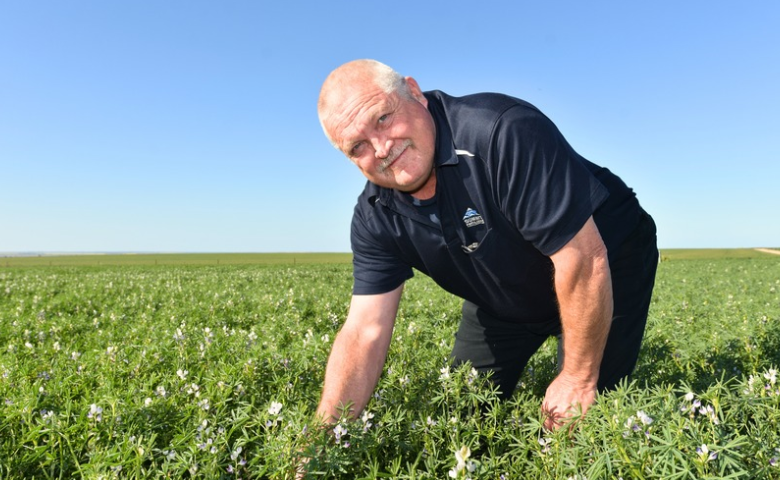
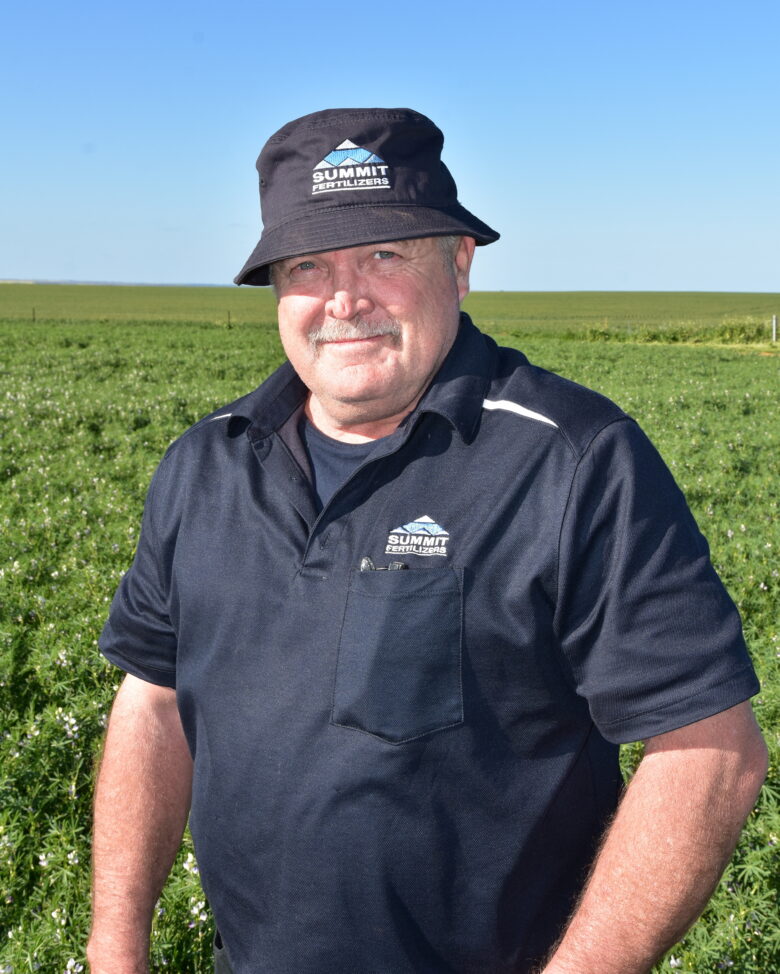
Summit Fertilizers Merredin Area Manager Kobus Marais says crops have improved with genetics and rotations and they need to be fed accordingly – “and you work this out by having continuous trials”.
In addition to new farming practices, modern machinery, improved agronomy, amelioration and new grain variety genetics that have increased crop yield potentials, improved nutrition linked to trials that investigate and validate recommendations relevant to the region has contributed to yield gains of at least 25 per cent.
Hailing from a farm east of Johannesburg in South Africa, Kobus has become one of the great personalities of the local industry over the past 25 years, the last 20 of which have been under the hat of Summit Fertilizers.
He said there was little trial work being done in the region earlier, so he commenced his own with local farmers initially to investigate different nutrition options, and they have continued to remain highly relevant to the area.
“We are not taking any strategies from high rainfall areas. It is all very relevant for this area,” Kobus said.
Summit Fertilizers area managers across the agricultural region conduct similar trials and hold discussions regularly to update results and ensure their relevance for the local areas.
In addition to Merredin, the trials managed by Kobus have been undertaken around Mukinbudin, Southern Cross, Yilgarn and Muntadgin on the region’s full range of soils, even investigating the use of liquid ammonium poly phosphate (APP) on alkaline, high pH morrel soils.
While full gross margin analysis is completed to justify the return on investment in fertiliser applications, particularly considering current input costs, Kobus said visual responses initially provided a lot of feedback to growers and this continued to be important today.
“Farms are getting bigger and with the next generation coming through, the trials are now assisting their understanding,” he said.
“Farming and practices are improving and we need to continually calibrate and validate the improvement – so there is a science behind it.
“Deep ripping and lime and gypsum applications have unlocked new yield potential, so trials have to be done to investigate what the new potential is. Yield targets now require a different nutrition package than what was historically relevant.
“We also now have VRT (variable rate technology) to observe and measure.”
The focus of the trials has been nitrogen by phosphorus applications, with or without potash.
During the season, Summit Fertilizers’ in-season nitrogen fuel gauge and calculator are used to help confirm applications.
The trials have shown that even where analysis indicated there was enough available phosphorus in soils and applications could be reduced, freshly applied phosphorus at seeding was still beneficial, especially with the higher nitrogen rates applied today.
Kobus said the trials had demonstrated higher yields can be achieved, however, just like humans, plants needed a balanced diet.
“You can’t just chase a nutrient alone. The trials have proven that fresh phosphorus is important and you cannot have high N unless P is there to support it. And then you have the conditions where potash proves beneficial, especially on sandy and low K analysis soils.”
“There are a lot of different interactions that take place, all of which need to be taken into consideration.
“Crops have improved with genetics and rotations and we need to feed them accordingly – and you work this out by having continuous trials.”
Kobus said potash applications were now becoming more standard practice in areas, including where it was deemed it would never be applied.
He said latest trials at Mukinbudin reflected this again this year, showing strong gains on soils with high phosphorus availability.